
Access Pittsburgh Family Court Records
Pittsburgh family court records are filed and maintained by the Allegheny County Department of Court Records, Civil/Family Division. Pittsburgh is the largest city in western Pennsylvania, home to approximately 302,000 residents, and serves as the seat of Allegheny County. The Family Division of the Court of Common Pleas handles divorce, custody, child support, protection from abuse orders, adoption, and juvenile matters for all Pittsburgh residents. You can search Pittsburgh family court records through the statewide UJS Portal or the Allegheny County online portal, or contact the Department of Court Records directly to obtain certified document copies.
Pittsburgh Quick Facts
Where Pittsburgh Family Court Records Are Filed
Pittsburgh residents file family court matters at the Allegheny County Department of Court Records, located at 414 Grant Street in downtown Pittsburgh. This office serves as the hub for all civil and family filings in the 5th Judicial District. The Family Division of the Court of Common Pleas maintains jurisdiction over divorce, custody disputes, child and spousal support, PFA orders, adoptions, and juvenile dependency and delinquency cases originating within Pittsburgh and throughout Allegheny County.
Pittsburgh also has a Municipal Court that operates within the city limits. Pittsburgh Municipal Court handles preliminary hearings, certain civil matters up to $12,000, and initial protection from abuse filings. Once a PFA petition moves beyond the temporary order stage, or when family court matters require a full hearing, the case transfers to the Family Division of the Court of Common Pleas at 414 Grant Street. Understanding which court handles your specific matter helps you request the right records.
| Court | Allegheny County Department of Court Records - Family Division |
|---|---|
| Address | 414 Grant Street Pittsburgh, PA 15219 |
| Website | alleghenycourts.us/family-civil |
| Municipal Court | alleghenycourts.us/municipal |
The city of Pittsburgh provides community services and municipal information through pittsburghpa.gov. For court-specific inquiries, contact Allegheny County Courts directly at alleghenycourts.us.
The Pittsburgh City Government website offers resources for residents navigating local government services. The official portal provides information on city departments, permits, and municipal services relevant to Pittsburgh residents involved in family court proceedings.
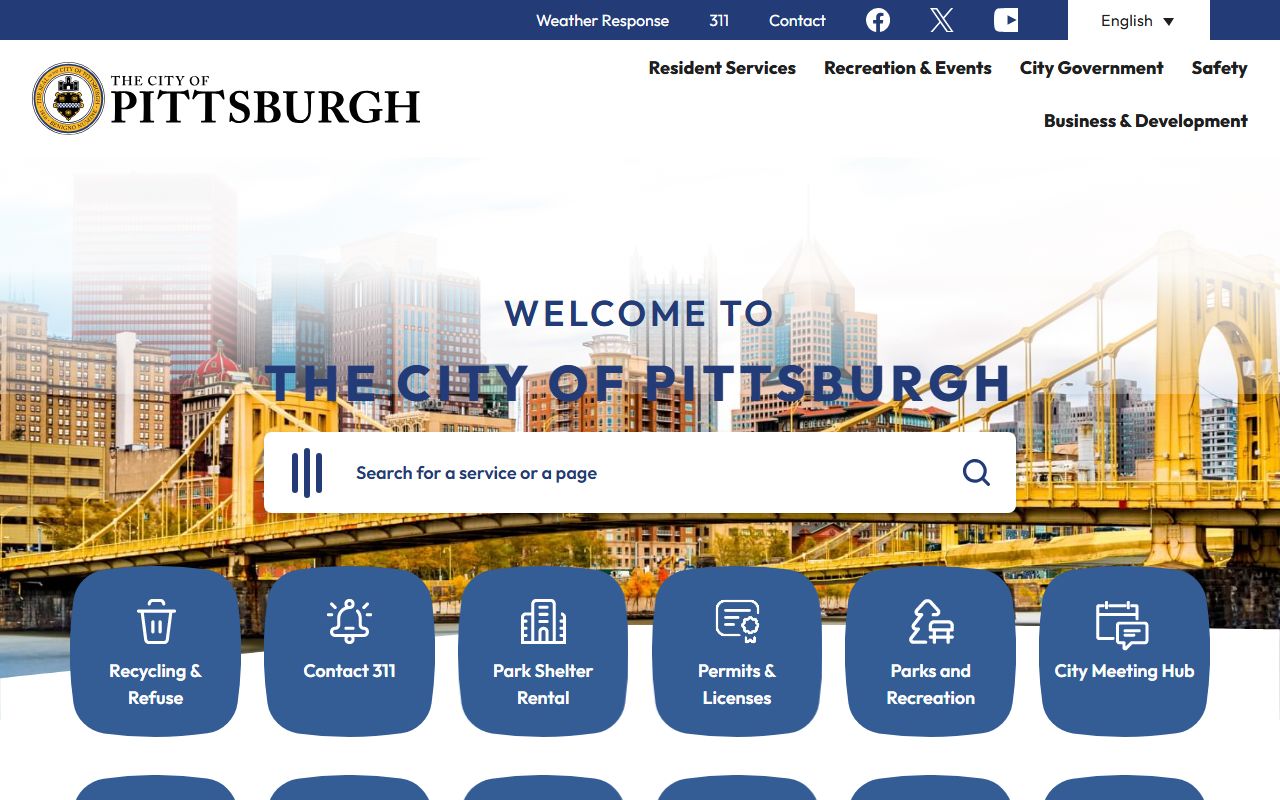
Pittsburgh residents can use the city portal to locate municipal offices and confirm which county services apply to their neighborhood before seeking family court records.
Note: The Clerk of Courts handles juvenile and criminal records separately from the Prothonotary, which manages civil and family filings. Be sure to contact the correct office when requesting Pittsburgh family court records.
Searching Pittsburgh Family Court Records
Allegheny County offers one of the most accessible online court record systems in Pennsylvania. The Allegheny County online docket portal at docket.alleghenycourts.us provides free public access to family court cases filed from 2002 forward. Searches require a party name or case number. Results show filing dates, case type, parties involved, and docket entries. This tool works for Pittsburgh divorce, custody, support, and PFA matters that went through the Court of Common Pleas.
The statewide Unified Judicial System Portal at ujsportal.pacourts.us also covers Allegheny County cases. Under 204 Pa. Code § 213.81, Pennsylvania courts make dockets, orders, and opinions remotely accessible to the public. Full case files, however, require an in-person visit to the courthouse. Most people find the Allegheny County portal faster and more detailed for Pittsburgh-specific family court records.
E-filing is available for eligible Pittsburgh family court matters through the Allegheny County system. Attorneys and self-represented litigants can submit documents electronically for certain case types. Contact the Department of Court Records to confirm which filing types accept electronic submission for your Pittsburgh case.
For in-person record searches, visit the Family Civil Division at 414 Grant Street during regular business hours. Staff can locate records by party name or case number. Bring a valid photo ID. Older records may require additional processing time. Certified copies of orders and decrees are available for a fee. The Temple University guide at guides.temple.edu provides a useful statewide overview of how Pennsylvania family court records are organized and accessed.
The UJS portal provides statewide case search functionality that complements the Allegheny County system. Searching Pittsburgh family court records through the statewide UJS Case Search portal confirms whether a case has cross-county implications or involves parties from outside Allegheny County.
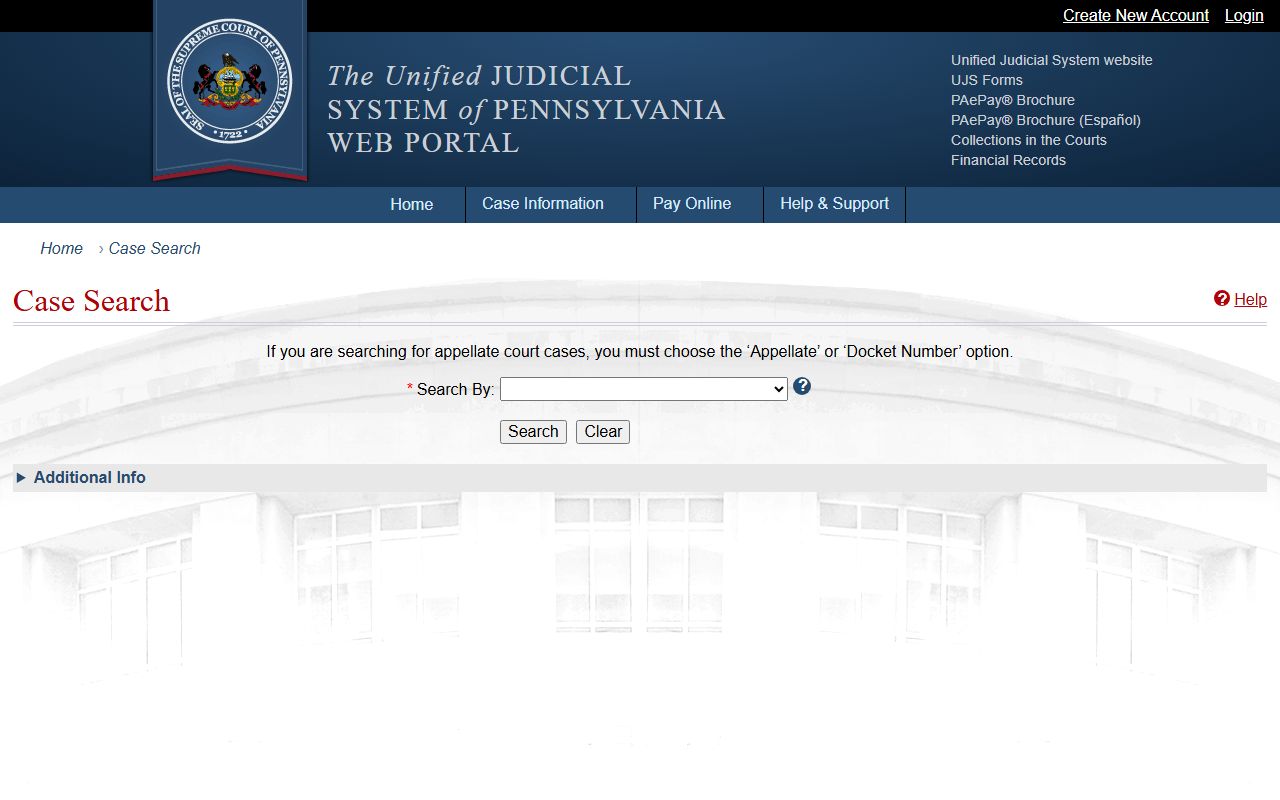
The UJS Case Search interface allows searches by party name, case number, or docket number across all 67 Pennsylvania counties, making it useful for Pittsburgh residents whose cases span multiple jurisdictions.
Types of Family Court Records in Pittsburgh
The Allegheny County Family Division handles a wide range of domestic matters for Pittsburgh residents. Divorce cases, governed by Title 23 Pa.C.S., make up a significant portion of the docket. Both contested and uncontested divorces are filed here, and the records include the complaint, answers, settlement agreements, and the final decree. Spousal support and alimony pendente lite orders are also part of the divorce file.
Custody and visitation cases represent another large category. Pittsburgh parents who cannot agree on a parenting schedule file custody complaints with the Family Division. Records include initial petitions, parenting plans, guardian ad litem reports, and final custody orders. Modifications filed after the original order are added to the same case docket. Child support cases are similarly tracked, with orders establishing payment amounts and records of enforcement actions.
Protection from abuse orders are issued by the Family Division after a hearing. The PFA record includes the petition, any temporary order, the hearing transcript, and the final order. These are public records unless sealed by the court. Adoption and guardianship matters handled by the Orphans' Court Division are maintained separately but within the same courthouse complex.
Juvenile dependency and delinquency cases are handled by the Juvenile Division at Allegheny County. Dependency proceedings involve children in need of protection or services. Delinquency records cover minors charged with offenses. Access to juvenile records is more restricted than adult family court records under Pennsylvania law.
Name change petitions, paternity establishment cases, and interstate custody matters also fall under the Family Division's jurisdiction in Pittsburgh. Each case type generates its own set of documents that become part of the public record, subject to any court-ordered sealing.
Note: Allegheny County family court records filed before 2002 may not be available through the online portal and may require an in-person visit or written request to the Department of Court Records.
Legal Help in Pittsburgh
Pittsburgh residents facing family court matters have access to several legal assistance resources. Pennsylvania Legal Aid provides free civil legal services to qualifying low-income residents, including help with custody, support, divorce, and PFA matters. Visit palegalaid.net to find the office serving Allegheny County and check eligibility requirements.
The Allegheny County Bar Association operates a lawyer referral service for residents who need a private family law attorney. Many Pittsburgh attorneys offer initial consultations at reduced rates. For self-represented litigants, the Allegheny County courts maintain self-help resources and form packets at the courthouse. Court staff cannot provide legal advice, but they can direct you to the correct forms and filing locations for Pittsburgh family court matters.
The Pennsylvania Courts website at pacourts.us provides statewide forms, procedural guides, and information about the court system under 42 Pa.C.S. § 301. These resources help Pittsburgh residents understand their rights and responsibilities in family court proceedings without needing to hire an attorney for every step.
Family Court Process in Pittsburgh
Pittsburgh family court cases follow the procedural framework established by Pennsylvania law. Title 23 Pa.C.S. governs domestic relations matters including divorce, custody, and support. When a Pittsburgh resident files a family court case, the clerk assigns a case number and the matter is docketed in the Allegheny County system. Both parties receive notice and have an opportunity to respond before any hearing takes place.
Custody cases in Pittsburgh typically follow a multi-step process. The filing party submits a custody complaint. The court schedules a conciliation conference where a court officer attempts to help the parties reach an agreement. If no agreement is reached, the case proceeds to a hearing before a judge or hearing officer. The final custody order is then entered and added to the public docket.
Divorce proceedings in Pittsburgh require meeting Pennsylvania residency requirements under Title 23 Pa.C.S.. At least one spouse must have lived in Pennsylvania for six months before filing. No-fault divorce based on mutual consent requires both parties to file affidavits after a 90-day waiting period. Irretrievable breakdown without consent requires a one-year separation period. Each step generates documents that become permanent family court records in Pittsburgh.
Protection from abuse proceedings move quickly because of their emergency nature. A petitioner can obtain a temporary PFA order the same day they file. The court schedules a full hearing within ten business days. At the hearing, both parties present evidence and testimony. The judge then decides whether to enter a final PFA order, which can last up to three years and may be extended. Pittsburgh Municipal Court handles initial emergency PFA filings, with final orders issued by the Court of Common Pleas.
Pennsylvania's Right-to-Know Law, 65 P.S. § 67.101, establishes the public's right to access government records including court filings. Family court records in Pittsburgh are generally accessible to the public unless a judge seals specific documents. Parties to the case always have the right to obtain their own records. Third parties may access dockets, orders, and opinions remotely but must visit the courthouse for full file review under 204 Pa. Code § 213.81.
The UJS portal homepage provides an entry point for locating Pittsburgh family court cases statewide and understanding what information is publicly available online before visiting the courthouse in person.
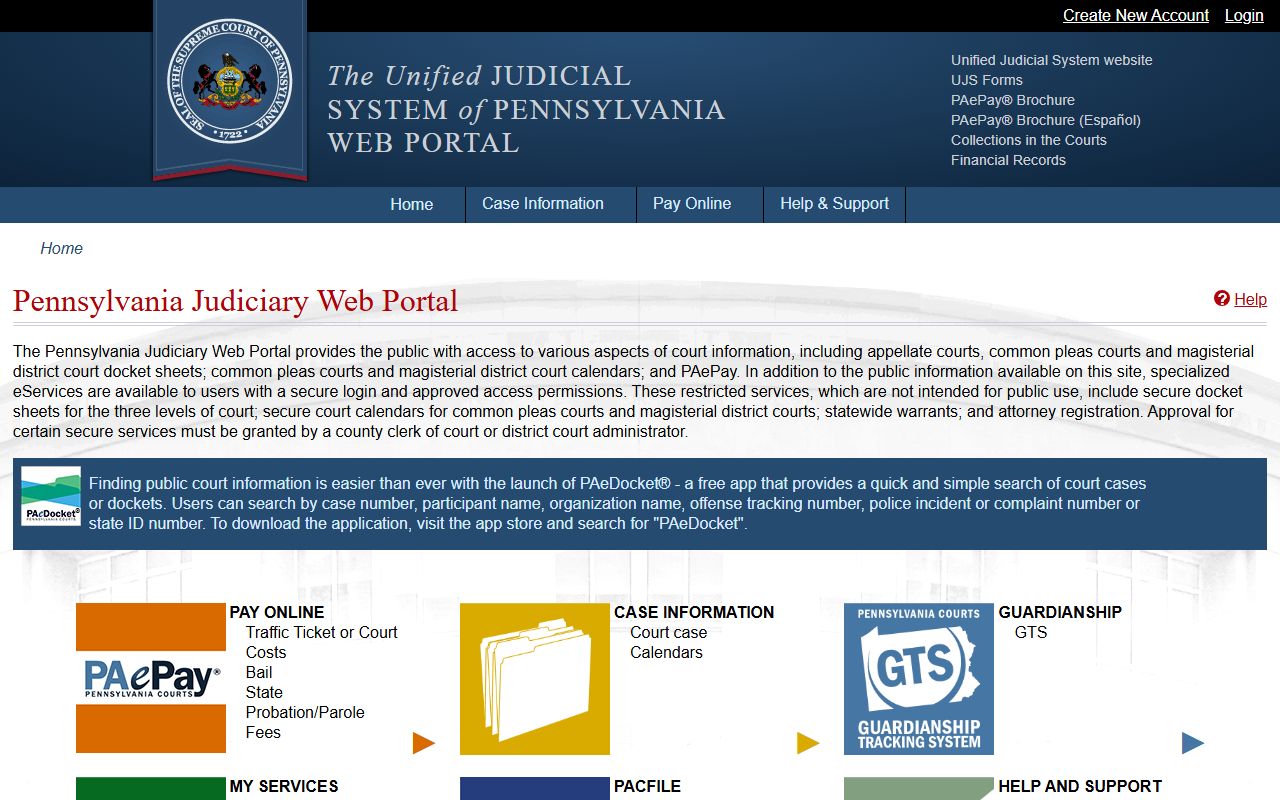
Bookmark the UJS portal to monitor Pittsburgh family court case activity and check for new orders or filings without visiting the courthouse each time.
Note: Child support cases in Pittsburgh are enforced through the Pennsylvania Child Support Enforcement System (PACSES). Enforcement actions, payment histories, and modifications are tracked separately from the original court order docket.
Allegheny County Family Court Records
Pittsburgh is the county seat of Allegheny County, and all Pittsburgh family court records are filed through the Allegheny County court system. The county page provides additional detail on court structure, filing procedures, and record access for all Allegheny County municipalities.
Nearby Pennsylvania Cities
Residents of nearby cities access family court records through their own county courthouse. Select a city below to find family court record information for that area.